AI’s impact on healthcare workforce debated, with policy — not technology — seen as key driver < Policy < Article
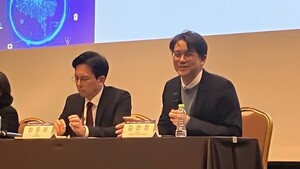
Experts were divided at a forum over whether the introduction of artificial intelligence into healthcare will change doctors’ roles and the workforce structure. Some noted that AI’s impact depends more on Korea’s fee-for-service system than on technology.
Dr. Kim Han-su, president of Ewha Womans University Mokdong Hospital, stated that the introduction of AI would not lead to a reduction in the number of doctors at the “AI in Hospitals” forum held during “The 17th Korea Healthcare Congress 2026 (KHC 2026)” at COEX in Seoul on Thursday.
He attributed this to “policy and reimbursement” constraints, not technology.
“Korea’s healthcare runs on a fee-for-service system. In the U.S., under value-based healthcare, efficient charting and billing matter, but not in Korea,” Kim said.
He added, “I doubt AI will reduce the workforce here. Policy, not just AI, drives adoption. The fee-for-service system means efficiency gains from AI rarely lead directly to workforce changes or savings.”
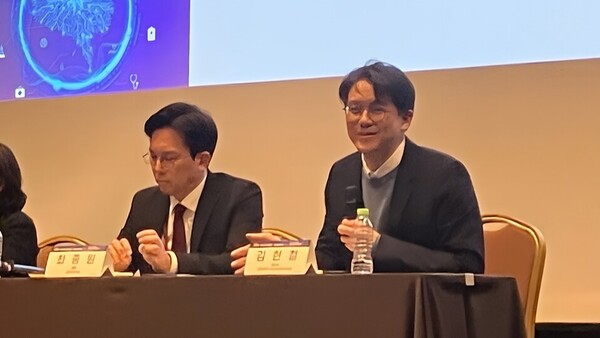
Professor Kim Hyun-cheol of the Department of Preventive Medicine at Yonsei University College of Medicine, who delivered the keynote presentation, predicted that the ripple effects of AI in the medical field would emerge more slowly than in other industries.
However, he emphasized that AI should be used not to replace human labor but as a catalyst to address the structural problems of the Korean healthcare system.
“AI’s effects in medicine will be slow and modest,” Professor Kim said. “AI can cut doctors’ repetitive tasks and charting, allowing more time for patient care and better communication.”
He added, “AI adoption must help end the ‘three-minute consultation’ in Korean healthcare.”
Kim continued, “If AI lets us use saved time and resources to improve care, it could be a turning point in service quality, surpassing simple cost reductions.”
In contrast to other speakers, Yoon Eul-sik, Vice President of the Korean Hospital Association and Vice President for Medical Affairs at Korea University, as well as CEO of Korea University Medicine, predicted that advances in AI technology would lead to a restructuring of the workforce.
“If AI becomes fully integrated, I expect the medical workforce to shrink by about one-third,” Yoon said. “Automation will force a fundamental shift in how human resources are allocated.”
link