Avoid 6 common dangers to keep furry friends safe
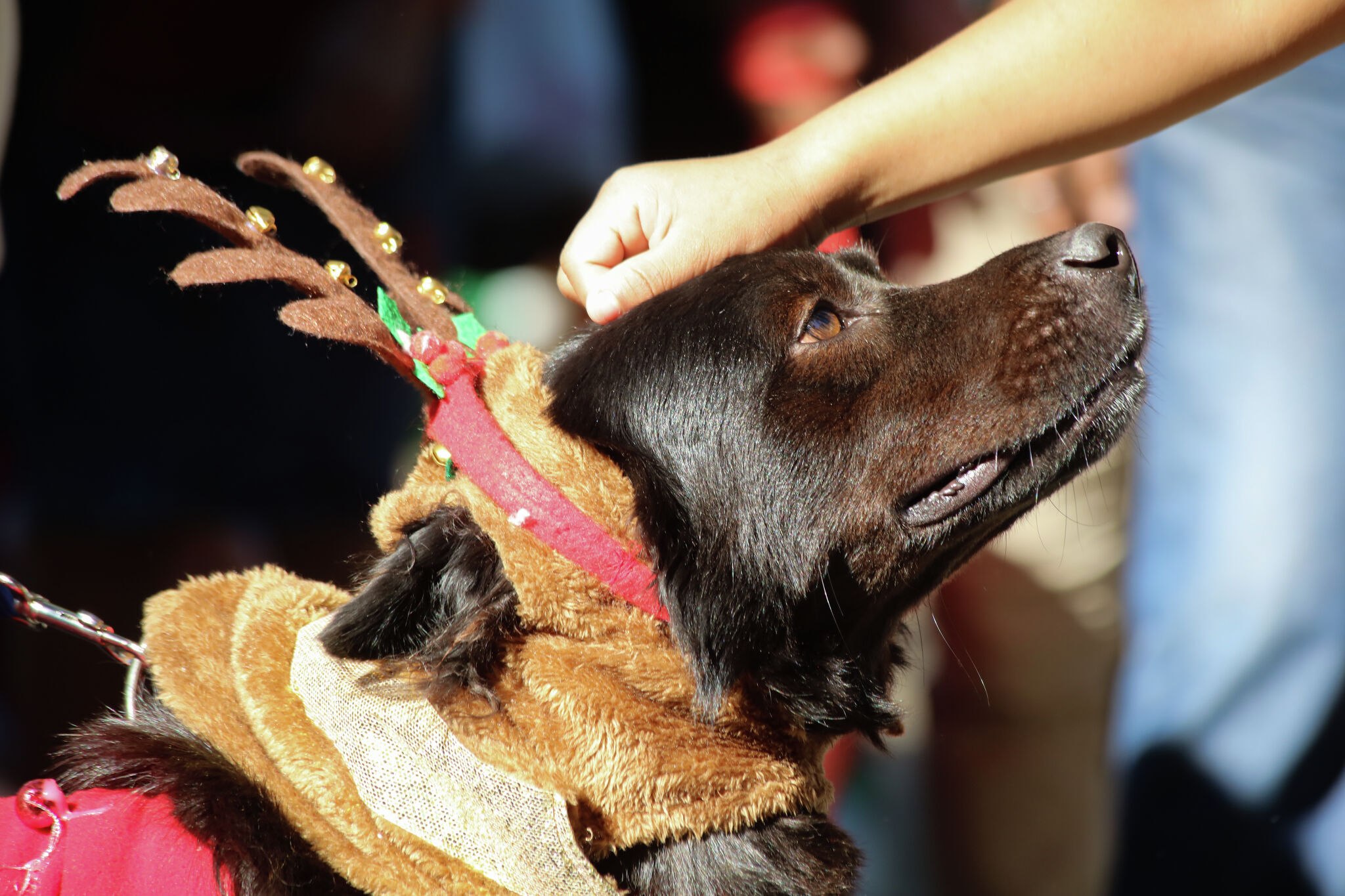

A person pets a dog that has moose antlers on its head during a Canine Fashion Show with Christmas Costumes in Cuscatlan Park on Nov. 23, 2025 in San Salvador, El Salvador.
Many pet owners want to include their furry friends in the holiday festivities and explore heartwarming ways to demonstrate your love and appreciation. However, seasonal activities, food and decorations can also pose additional dangers to animals.

Leading veterinary service community Thrive Pet Healthcare warns pet owners of six dangers to avoid this holiday season, along with testimonies from veterinaries with lived experiences. In no particular order, here’s how to keep your fur baby safe throughout the festivities.
Article continues below this ad
No. 1: Chocolate is good for humans, but not pets
You’ve probably heard warnings against feeding dogs chocolate — and this applies to cats, as well.
The sweet contains caffeine and theobrommine, two toxic components called methylxanthines. These stimulants are easily metabolized by humans but can wreak havoc on a pet’s body, according to the James L. Voss Veterinary Teaching Hospital at Colorado State University. A buildup can put a pet’s body into overdrive, overstimulating the heart and central nervous system. Darker chocolate tends to be more dangerous than milk chocolate.
Along with chocolate, pets should not be given cooked bones, grapes, raisins, onions, alcohol or xylitol (natural sugar alcohol found in gum and sugar-free treats).
Article continues below this ad

If given to pets, chocolate can overstimulate the heart and central nervous system. Depending on the type of chocolate and the dog’s health and weight, eating chocolate can be fatal.
“Exuberant 4-year-old boxer Rocky turned Christmas Eve into a chocolate crime scene. His family came home to unwrapped Christmas presents and an empty box of chocolates,” said Dr. Cindy Hong, a veterinarian at a TPH Urgent Care in California. “We induced vomiting, and about half a pound of chocolate come back up. He clearly had a sweet tooth.”
“Thankfully, his family brought him in right away to get the care he needed,” Hong continued. “Rocky was doing great the next day after an overnight stay at a 24-hour ER, but it could’ve ended very differently. Chocolate and dogs don’t mix!”
Article continues below this ad
If you’re going to feed your pet stable scraps, stick to safe foods like plain turkey, green beans and sweet potatoes. Pet treats are always a good alternative, as well.
No. 2: Décor isn’t a snack, either

Pets who eat tinsel and other holiday decorations can experience significant symptoms, especially if the intestines are damaged or obstructed.
Sometimes pets mistake holiday decorations as food, which can lead to serious health issues. Tinsel, ribbons and ornaments are choking hazards and can lead to intestinal blockages of injuries.
Article continues below this ad
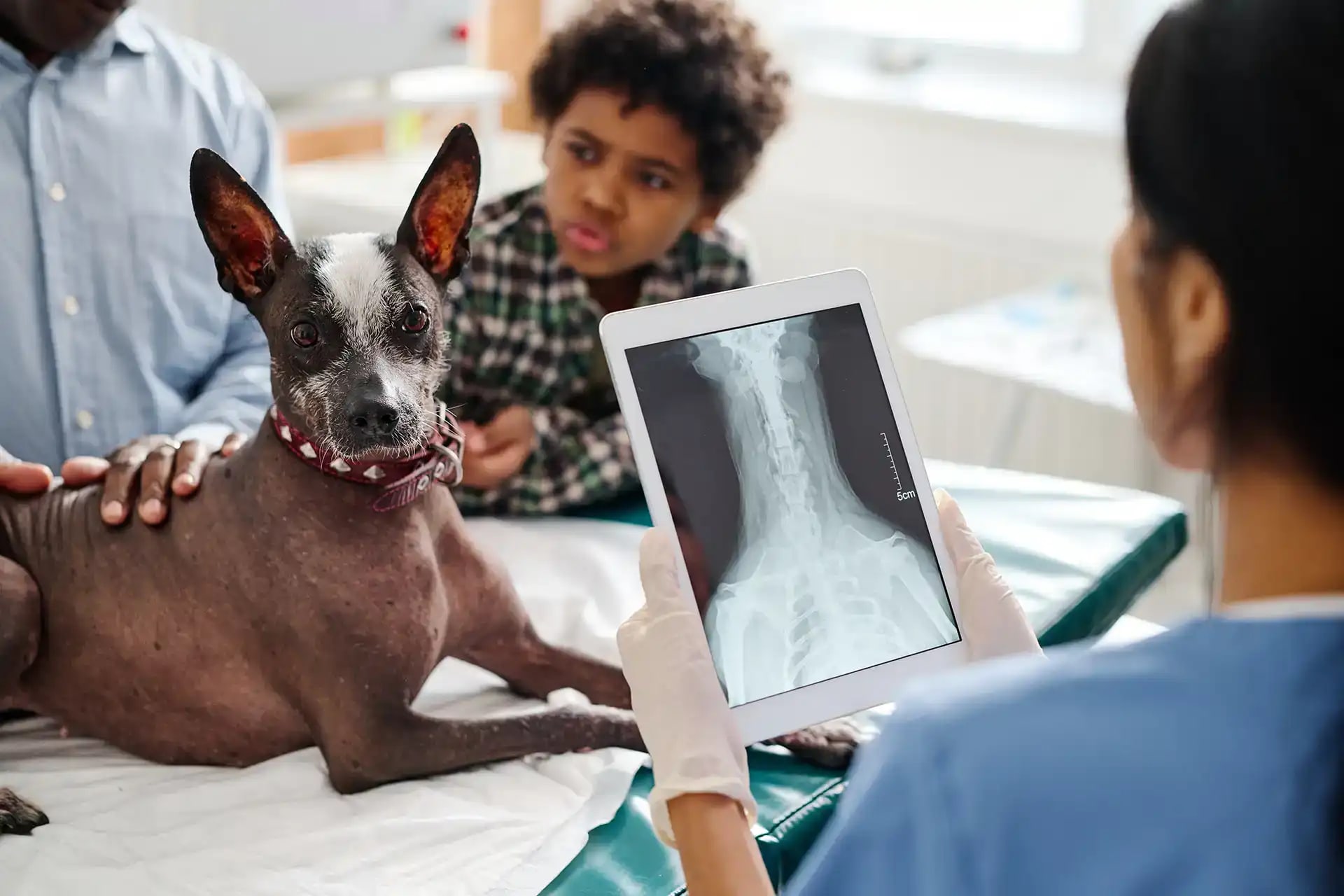
“We saw a cat in the ER once that had decided the sparkling tinsel on the Christmas tree looked like a tasty holiday snack,” said Dr. Brittany King, an emergency veterinarian at TPH Specialists in Mansfield, Texas. “After the festive mischief and a bout of vomiting, X-rays showed an intestinal blockage. Surgery reveals a long strand of tinsel tangled in the intestines.”
“Thankfully, the curious kitty made a full recovery and was back to batting ornaments and napping under the tree, supervised this time.”
To avoid such scares, and burns and electrical shocks from lights and wires, stick to shatterproof ornaments, flameless candles and cord management. Skip the tinsel to lower the risk of your pet ending up on an operating table.
No. 3: Speaking of sparkles, keep glitter away from pets

Glitter, such as that on holiday ornaments, can trigger digestive issues in pets that ingest it.
Decorations don’t need to be choking hazards or have flames to be dangerous for your pet. While glitter made be fun for you, it’s a lot less fun for an animal who ingests it.
Article continues below this ad
“We had a pit bull mix who got into the Christmas ornaments and ended up passing glitter in his stool for a week. He was sparkling from the inside out,” said Dr. Mayra Apolo, an emergency veterinarian at Capital Veterinary Specialists Jax in Florida. “It might sound funny, but he needed a couple of days in the hospital on IV fluids to make sure nothing serious was happening.”
“Thankfully, he didn’t need surgery and got to go home and enjoy the rest of his holiday,” Apolo continued. “This was a good reminder that even something as innocent-looking as a festive decoration can become dangerous.”
A pet that ingests something harmful may show symptoms like vomiting, diarrhea, lethargy or a lick of appetite. Even if you suspect your pet ate something but symptoms haven’t yet appeared, early action can save a pet’s life. Call your veterinarian immediately, or call the Pet Poison Helpline at 855-764-7661 or use the chat option on the website.
No. 4: If pets shouldn’t eat it, they shouldn’t chew on it either

Pets that chew on holiday decorations may swallow them, which can put them in danger.
Many of the same holiday decorations that are dangerous for pets to ingest also make hazardous chew toys.
Article continues below this ad
“An English bulldog once came in after eating a segment of large Christmas lights, wires and all. On the X-ray, we could clearly see the intact bulbs in his stomach,” said Dr. Aaron Weiner, an emergency veterinarian at Tampa Bay Veterinary Specialists and Emergency Care Center in Florida. “We induced vomiting and, luckily, he brought them all up without needing surgery.”
“It was one of the more memorable holiday cases I’ve seen.”
No. 5: Give pets a break — no, really
Just as you may need a break from that one cousin you see at holiday dinners, your pet may require some down time amid the festivities. Noise, guests and other forms of overstimulation can trigger anxiety in your pet, which may also lead them to act out. To make your furry friend more comfortable, set up a cozy, quiet room featuring soothing background music and a beloved toy, chew or blanket before your guests arrive. This gives you pet a secure place they can retreat to away from the excitement of the party.
Article continues below this ad

Pets can become overwhelmed during holiday parties, so it’s a good idea to designate a quiet space for them to decompress.
If your pet is roaming the party, supervise interactions with young children who may be less familiar with appropriate ways to treat a pet. Ask your guests not to feed your pet, to avoid any of the mishaps mentioned above.
Highly anxious pets can be treated with prescription medicatioins — but these must be provided in advance under the supervision of a veterinarian.
No. 6: Reconsider traveling with your pet
When you plan to leave town for any length of time, your first instinct may be to bring your pet with you. However, this may do more harm than good.
Article continues below this ad

Before traveling with a pet, consider their temperament and how safe they will feel at your destination.
Consider your pet’s temperament and if your destination is actually pet-friendly. A friend or relative may have pets of their own, but the pets are territorial and not welcoming of visiting pets. Finding a pet sitter or a boarding facility may be a better option than bringing your pet into an unfamiliar and/or high-stress environment.
link