Intelligent Healthcare – Healthcare – Saudi Arabia

Foreword
This report is the result of extensive research into the
value being created by artificial intelligence (AI) within the
healthcare sector. It is designed to provide actionable insights
for leaders at every stage of their AI journey, from those
deploying their first pilots to healthcare organizations seeking to
scale enterprise-wide AI initiatives.
Artificial intelligence holds tremendous promise for the
healthcare sector, offering powerful solutions to some of its most
pressing challenges, from rising patient demand and persistent
workforce shortages to growing clinical and administrative
backlogs.
The research finds that while healthcare organizations are
beginning to demonstrate advanced capabilities in their use of AI,
many continue to struggle with the challenge of operationalizing
use cases and scaling beyond pilots and proofs of concept. A range
of barriers continue to impede progress. Fragmented
implementations, difficulties in justifying the return on AI
investments, and the need for deep cultural transformation —
particularly in terms of workforce trust, training and engagement
— remain common hurdles. Persistent issues such as data
silos, lack of interoperability between systems, and the absence of
clear, comprehensive AI regulatory frameworks further complicate
adoption.
Where meaningful progress has been achieved, it has been the
result of a deliberate strategy. Successful adopters have ensured
use cases are closely linked to core value streams such as care
delivery, diagnostics, and patient flow. They have embedded AI into
everyday workflows rather than treating it as a separate innovation
stream, building trust by involving clinicians early and often in
the design, testing and refinement of AI tools.
As healthcare organizations embark on transformation, technology
and AI should serve as a catalyst. Organizations should:
- Formulate a clear AI strategy, with the aim of improving
patient outcomes, workforce experiences, population health, health
equity and reducing costs. - Create sustainable technology and data infrastructure by
modernizing legacy systems and investing in secure, interoperable
platforms. - Build trust through transparent AI practices, ethical
governance, addressing concerns about bias and invest in robust
cybersecurity. - Foster a culture that integrates AI to uplift the potential of
the healthcare workforce and communities they serve.
Without a strategy focused on a clear value proposition, and a
structured approach and governance, navigating the challenges and
maximizing the impact of AI for healthcare organizations can be
difficult. Our aim with this publication is to provide actionable
insights on how to develop this strategy, approach and governance
to create better outcomes for healthcare.
AI has the potential to fundamentally reshape healthcare —
not by replacing the human touch, but by enhancing it. By
integrating AI across different clinical and community settings and
different operational streams, we can improve outcomes, ease the
burden on healthcare workers, and create more resilient,
patient-centered health systems. Dr. Anna van Poucke — Global
Head of Healthcare KPMG International
Introduction
Healthcare organizations are increasingly experimenting
with AI across a range of use cases — from clinical decision
support and imaging diagnostics to administrative automation and
virtual assistants. However, many are finding it difficult to
translate these experiments into meaningful and sustained
value.
The Intelligent healthcare publication offers a roadmap for
healthcare leaders to responsibly leverage trustworthy AI, helping
to ensure it delivers measurable value while supporting
sustainable, patient-centric healthcare systems. This report
provides C-suite executives and decision-makers with actionable
insights to navigate AI adoption complexities. In this report,
we:
- Share insights on current AI strategy, investment, and
implementation in healthcare, based on KPMG research and interviews
with technology leaders globally. - Explore the traits of intelligent healthcare organizations and
strategies for their development. - Provide a blueprint for intelligent healthcare organizations
that outlines key, high-level capabilities for AI-powered,
customer-centric healthcare.
The healthcare sector faces distinct adoption
challenges
Healthcare presents a uniquely complex environment for AI
adoption. Concerns around clinical safety, ethical use, patient
data protection, and regulatory compliance create significant
friction. Many organizations struggle to modernize legacy
infrastructure, overcome data silos, and establish the governance
frameworks necessary to scale AI responsibly. The highly fragmented
nature of healthcare systems — often characterized by
decentralized decision-making, workforce shortages and uneven
digital maturity — further complicates progress.
Healthcare is a different territory because you are dealing with
people’s lives. It’s a difficult area where AI adoption
will be a little bit slow compared to the other organizations.
Chief Technology Officer — Australia
A new generation of AI agents could reshape care
delivery
The emergence of intelligent AI agents has the potential to
revolutionize healthcare. These agents can act as digital
co-pilots, helping clinicians interpret diagnostic results,
personalize treatment plans, and manage patient pathways in real
time. They can also serve as virtual care navigators, supporting
patients with proactive health management, appointment scheduling,
and medication adherence. In administrative functions, AI agents
are poised to streamline tasks such as claims processing, medical
coding, prior authorization, and patient triage — unlocking
significant productivity gains and improving staff experience.
A framework for realizing AI’s value in
healthcare
To move beyond experimentation and deliver impact at scale,
healthcare organizations need a clear, structured approach to AI
adoption. In this report, we introduce the three phases of AI value
— a framework designed to help clinical providers maximize
value by aligning AI investments to patient and operational
outcomes, prioritize scalable use cases, and prepare for the next
generation of AI technologies. Through this lens, we explore how
leading healthcare systems are moving from pilots to
enterprise-wide transformation — and how others can
follow.
Three phases of AI value creation in
healthcare
- Enabling workforces and building AI
foundations
Establishing the data, governance,
technology architecture and skills necessary for responsible AI
adoption.
- Embedding AI across the enterprise
Scaling AI solutions across clinical
decision support, operational efficiency and patient engagement to
deliver greater value.
- Evolving operating models and ecosystems
Shifting toward AI-powered, adaptive
healthcare models that foster collaboration across primary care,
provider networks, healthcare systems, and broader care ecosystems
that include public health, social, mental health care and
community-based organizations.
Researchfindings
Healthcare organizations are preparing to further integrate or
explore new opportunities with AI, but in an environment where
patient safety is critical, they are proceeding with caution,
taking an evidence-driven approach to help ensure value-driven AI
implementation that safeguards trust with the population and
workforces.
Current state
Evolution versus revolution
Due to the inherently human-centric nature of certain healthcare
functions, AI’s impact thus far has been more evolutionary than
revolutionary. Rather than driving radical transformation, its role
is primarily focused on streamlining processes and specific use
cases. The top five applications are:
- Generative AI (71 percent)
- Speech recognition (70 percent)
- Agentic AI (68 percent)
- Machine learning (66 percent)
- Machine learning (66 percent)
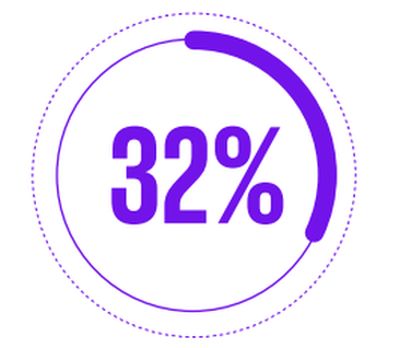
say AI represents greater than 10 percent of their
organization’s global technology budget
AI investments and impact
Healthcare organizations are starting to allocate larger
portions of their IT budgets to AI-related technologies. Our
research reveals almost one-third (32 percent) of healthcare
leaders say AI represents greater than 10 percent of their
organization’s global technology budget. But when it comes to
making further major investments, there is caution. A little over
three-quarters (76 percent) of healthcare respondents agree that it
is best to wait to see how the AI tech landscape evolves before
making significant investments.
Over the past 15 years, many sectors of the economy have been
radically reshaped by digital technologies. Yet the NHS is in the
foothills of digital transformation. The last decade was a missed
opportunity to prepare the NHS for the future and to embrace the
technologies that would enable a shift in the model from
‘diagnose and treat’ to ‘predict and prevent’
— a shift I called for…more than 15 years ago. 1 The Rt
Hon. Professor the Lord Darzi of Denham, OM KBE FRS FMedSci
HonFREng Independent Investigation of the National Health Service
in England, September 2024
Growing realization, that organizational change
management is required
Fifty-eight percent of healthcare leaders report that AI is
either fully embedded in or is a core component of their
operations; the remaining respondents are exploring or in the early
stages of adopting AI. Many institutions recognize that AI will
necessitate shifts in their operational models, requiring a
strategic rethinking of workflows and patient care pathways to
fully integrate AI.
Success demands a new level of
collaboration
Only 44 percent note that their operating model consistently
enables cross-functional collaboration. Our interviewees observed
that clinical healthcare has traditionally been highly siloed,
largely due to the depth of expertise required by specialist
clinicians. Each medical specialty — whether cardiology,
oncology, radiology or neurology — has developed its own
highly specialized knowledge, diagnostic protocols, and treatment
methodologies.
This specialization has led to fragmented care pathways, where
different specialists manage specific aspects of a patient’s
condition without seamless coordination.
Additionally, healthcare IT systems have reinforced these silos,
with department-specific electronic health record (EHR) systems,
imaging databases, and workflow tools often lacking
interoperability. AI has the potential to bridge these gaps by
enabling more connected, intelligent systems that support
integrated care pathways, improving coordination, efficiency, and
patient outcomes.
Data quality and management is critical
Data privacy and security have emerged as critical priorities
for organizations to proceed in the embedding of AI in their
workflows. Organizations have learned that robust governance
frameworks are needed to help ensure patient data protection,
compliance with evolving regulations, and trust-building in
AI-driven processes.
Exploration continues even though long-term ROI is
uncertain
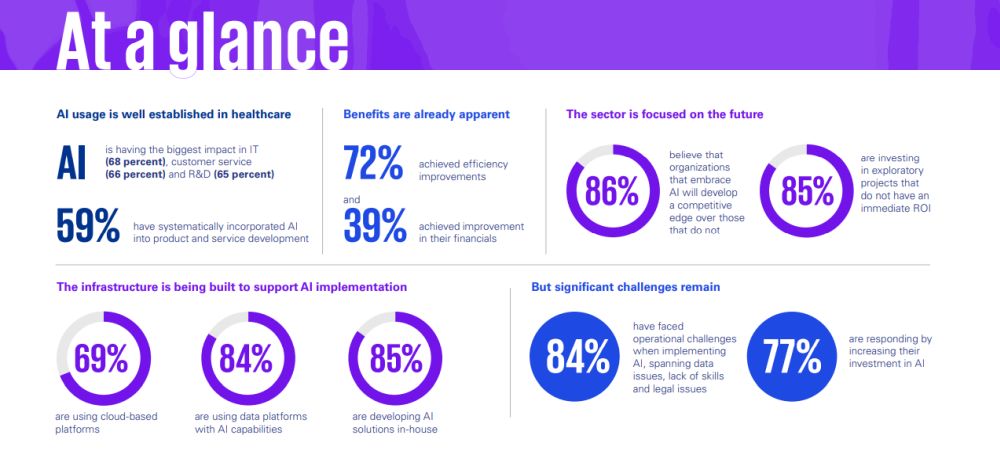
Sixty-nine percent of respondents state that they are under
pressure from shareholders to demonstrate return on investment
(ROI) from their AI investments. Respondents recognize that ROI is
not always immediate; while it improves efficiency, its direct
financial impact is still being assessed. Despite this, 85 percent
are pursuing projects where the ROI is not yet certain.
Next-generation AI is being adopted in
healthcare
The healthcare industry already has a high usage of AI agents
(68 percent) and is preparing for the next new evolution of AI:
autonomous agents (agentic). In fact, 84 percent of respondents
feel comfortable with AI making end-to-end autonomous decisions for
specific processes in their organization.
Agentic AI holds considerable promise across healthcare
operations, from direct patient care to support and back-office
processes. It goes beyond simple task automation by proactively
identifying clinical and operational issues, recommending solutions
and acting in collaboration with human teams.
By integrating seamlessly with electronic health records (EHRs)
and hospital management systems, agentic AI can enhance care
delivery at the bedside, streamline patient-facing support
services, and help optimize administrative workflows behind the
scenes. Unlike traditional AI models that rely on predefined inputs
and outputs, agentic AI can interpret multimodal patient data,
collaborate dynamically with medical teams, and initiate actions
based on real-time clinical insights.
For example, AI agents could continuously analyze vital signs,
imaging, and lab results to detect early deterioration in high-risk
patients, alert clinicians proactively, and even suggest
interventions. While reducing cognitive overload for healthcare
professionals, agentic AI allows them to focus on complex
decision-making and direct patient care, ultimately improving both
outcomes and operational efficiency.
However, to implement agentic AI successfully requires
modernizing the data infrastructure to support real-time,
multimodal inputs; embedding robust governance to help ensure
safety, transparency and accountability; and codesigning solutions
with clinicians to help ensure AI agents enhance, rather than
disrupt, clinical workflows.
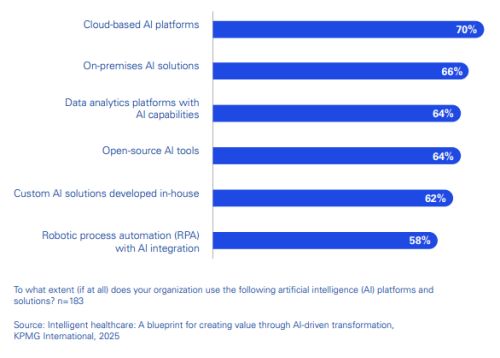
Figure 1: Significant or extensive use of AI in healthcare
To view the full article, click here.
The content of this article is intended to provide a general
guide to the subject matter. Specialist advice should be sought
about your specific circumstances.
link