Doctor shortage projections ignite fresh tensions with medical groups


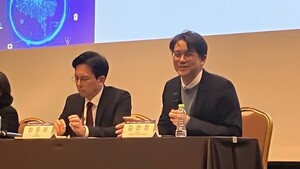
Doctors walk down the hallway of a major hospital in Seoul, Wednesday. Newsis
A recent estimate showing Korea could face a severe doctor shortage by 2040 is reigniting tensions over medical school quotas, as medical groups move to discredit the projections.
The Physician Workforce Projection Committee, an advisory body involving representatives of doctors, warned earlier this week that the country could face a shortage of up to 11,136 doctors by that year, even if artificial intelligence is deployed more widely in clinical practice. The projections put demand for physicians at between 144,688 and 149,273 by 2040, while the active workforce is expected to reach only 138,137 to 138,984, leaving a gap of 5,704 to 11,136 doctors.
The new numbers are significantly lower than the “15,000 doctors short by 2035” projection presented during the previous Yoon Suk Yeol administration, which used that number to justify expanding the nationwide medical school quota by 2,000 extra students. This plan of increasing the annual intake from 3,058 to 5,058 students was eventually reversed following a fierce backlash from trainee physicians, who demanded an objective basis for the figure.
The new forecast suggests that easing the projected peak shortfall of up to 4,923 doctors in 2035 over a 10‑year period would require increasing medical school enrollment by roughly 500 students a year.
But the Lee Jae Myung administration is expected to tread carefully, given that any increase in the quota could again unleash medical turmoil.
Doctors are already pushing back. The Korean Medical Association (KMA), the largest group representing physicians in the country, accused the committee of failing to take major factors into account, such as potential productivity gains.
“It is regrettable that, under intense time pressure and without robust research or sufficient discussion on physicians’ workloads, productivity and related factors, projection results were released without adequate review. Such haste, which fails to fully examine key elements that could decisively influence the findings, is inappropriate for a policy‑making process that will shape the future of our health care system,” the KMA said in a statement released Wednesday. “The physician workforce policy should never be set with the narrow goal of ‘producing a certain number of doctors,’ but instead with the higher goal of ‘producing a certain number of good doctors.’”
The association added that it will come up with its own projections.
This sentiment is reflected in statements released by other groups representing doctors. The Korean Intern Resident Association dismissed the committee projections in a stronger tone.
“Training health professionals is a specialized field that goes far beyond simple head counts. It must give foremost consideration to the availability of educational infrastructure and the capacity of training facilities to take on additional trainees. However, throughout the entire course of the committee’s discussions, there was no plan to secure the necessary faculty or to build adequate training environments to properly educate the expanded intake,” the group said. “The government should stop trying to legitimize the committee’s decisions by relying on a poor‑quality set of projections thinly disguised as ‘science.’”
Based on the Physician Workforce Projection Committee’s projections and with further talks with representatives of doctors, the Health and Medical Policy Deliberation Committee is expected to determine next year’s medical school quota by the end of this month.
link